
Growth Without economic understanding: Why Pakistan’s Strategies Keep Failing
Policy as if it were an engineering problem rather than an incentive problem. Growth accelerates not when governments build better projects in a distorted systems, but when controls are dismantled.

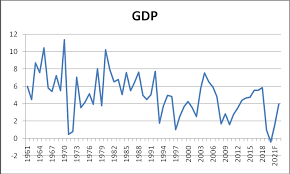
Pakistan’s growth strategies over the past decade present a striking paradox. The language has become more polished, the diagnostics more candid, and the documents increasingly confident in their analytical tone. Yet outcomes have not improved. Investment remains weak, exports stagnate, productivity lags peers, and job creation continues to fall short of demographic pressure. This is not a mystery. While the vocabulary has evolved, the underlying methodology has not. Pakistan continues to plan for growth without a theory of how growth actually happens.
From Vision 2025 through the Punjab Growth Strategy 2018, its 2023 revision, and the latest implementation frameworks, the state continues to imagine growth as something to be engineered through better plans, tighter coordination, and more disciplined execution. Markets, incentives, reallocation, and political economy remain secondary. This is not a failure of intent. It is a failure of method.
Vision 2025: aspiration without mechanism
Vision 2025 was explicitly framed as an aspirational document rather than a strategy. It sought to define a destination, not a roadmap. In doing so, it correctly identified many of Pakistan’s binding challenges: a demographic surge, declining productivity, low investment, weak exports, and the inability of past growth episodes to translate into human development. It acknowledged global trends—urbanization, technological change, climate stress—and spoke the language of inclusive growth, private-sector leadership, and a knowledge economy.
But Vision 2025 never articulated a theory of growth. Productivity was invoked without explanation. The private sector was celebrated without confronting the environment in which it operates. Institutions were mentioned, but not analyzed as incentive systems. Markets appeared as abstract channels, while the state appeared everywhere—as facilitator, coordinator, regulator, and provider. The document assumed that once aspirations were clearly stated, strategies and plans would naturally follow.
This omission matters. Modern growth research—from institutional economics to firm-level productivity studies—shows that sustained growth emerges from incentives, contestability, reallocation, and credible enforcement. Vision 2025 gestured at governance reform but never treated governance as the central constraint on growth. In doing so, it preserved the planning mindset that has shaped Pakistan’s economic management since the colonial period.
PGS 2018: sharper diagnosis, unchanged logic
The Punjab Growth Strategy 2018 claimed to move beyond aspiration toward strategy. Its diagnosis was more grounded, its targets more concrete, and its sectoral focus more explicit. Yet the methodology remained unchanged. Targets were declared first, and instruments were selected afterward. Growth was assumed to follow from sector prioritization, improved coordination, and better alignment of public spending.
What was missing was any explanation of reallocation. The strategy did not specify how capital would move from low-productivity to high-productivity firms, how land would shift to more productive uses, or how inefficient incumbents would exit. There was no discussion of firm entry and exit, bankruptcy, competition policy, or creative destruction. Land markets—arguably Punjab’s most binding constraint—were treated as passive inputs rather than politically protected distortions. Infrastructure and sector initiatives were expected to raise productivity without addressing these fundamentals.
Institutional reform was framed almost entirely in managerial terms. Institutions were delivery mechanisms to be strengthened, digitized, or coordinated, not incentive systems that shape behavior. Courts were discussed as service providers, not as enforcers of contracts. Regulators were treated as facilitators, not as gatekeepers with discretionary power. Governance became a question of capacity, not constraint.
The outcomes were predictable. As the 2023 strategy itself later admits, investment targets were missed, exports weakened, job creation fell short, public-private partnerships remained largely non-operational, and—most revealingly—no major reforms were implemented. This single sentence is the real evaluation of PGS 2018. It confirms that the failure was not one of shocks or execution, but of method and political economy.
PGS 2023 and the illusion of a “model”
PGS 2023 claims a methodological advance by grounding the strategy in a “model.” This claim does not withstand scrutiny. What is presented is not a formally specified economic model in the standard sense. No equations are written down. No functional form is stated. No distinction is made between levels and growth rates, short-run and long-run dynamics, or factor accumulation and productivity. The document gestures toward a production-function logic—output depends on capital, labour, public capital, and policy variables—but this remains a conceptual description.
Crucially, no parameters are reported. There are no elasticities, multipliers, coefficients, or weights. We are not told whether relationships were estimated econometrically, calibrated from external studies, or inferred through index-based scoring. There are no regression tables, no standard errors, no robustness checks. The analysis cannot be replicated, stress-tested, or falsified.
Without transparency, the claim of being “model-based” adds rhetorical authority but little analytical substance. We do not know whether the model was peer-reviewed, published, or externally scrutinised. We do not know the data, the time period, or the identification strategy—if any. Reliance on such a model therefore rests on trust rather than evidence. For a strategy guiding major public resource allocation, this is a serious weakness.
Despite new language about analytics and evidence, PGS 2023 ultimately refines rather than transforms the planning paradigm. The changes reduce friction at the margin—better data, clearer priorities, improved coordination—but they do not alter incentives, power, or rents. Growth is still imagined as something to be engineered through better plans and programs.
The core instruments remain unchanged: PSDP and ADP projects, infrastructure spending, sector initiatives, skills schemes, and subsidies. This is brick-and-mortar planning with better data. Capital is added rather than reallocated. Markets are facilitated rather than disciplined. Inefficient incumbents are supported rather than displaced.
There is no serious engagement with rents or capture. The strategy does not ask who benefits from existing distortions, who loses from reform, or why inefficiency persists. Creative destruction is absent. Growth is imagined as additive—more projects, more programs—rather than reallocative. Institutions are treated as variables to be strengthened, not constraints to be imposed on power.
Implementation without economics
Everyone says, “We know what needs to be done; the problem is implementation.” This refrain dominates policy meetings and planning documents, and it explains why so many reform agendas collapse into wish lists. Once the diagnosis is framed as an execution failure, policy stops being about changing incentives and starts being about delivering targets. Instruments disappear. Trade-offs are avoided. What remains are aspirations without mechanisms—lists of outcomes detached from the political economy that blocks them.
This mindset naturally produces “implementation frameworks.” If growth fails, the logic goes, plans must not have been executed well enough. The response is dashboards, timelines, coordination units, delivery cells, and monitoring committees. But this treats policy as if it were an engineering problem rather than an incentive problem. It assumes that the underlying rules are correct and that only administrative effort is lacking. In reality, when policies protect incumbents, suppress entry, misprice energy, or tax exports implicitly, better execution does not fix the problem—it accelerates it. Efficiently delivering bad policy does not generate growth; it entrenches stagnation.
Global experience makes this distinction clear. Growth accelerates not when governments learn to coordinate better around distorted systems, but when they dismantle controls and allow markets to work. Latin America’s lost decades were not caused by weak implementation of import substitution but by its persistence. India’s post-1991 acceleration did not come from better five-year plans but from removing licenses, opening trade, and allowing firms to enter and exit. Where incentives change, private activity responds even with weak institutions. Where incentives remain wrong, no amount of “delivery” can substitute for reform.
What a real growth framework would look like: lessons from FEG and RAPID
If Pakistan’s growth strategies are to move beyond refinement without reform, they must abandon the planning mindset and adopt a framework grounded in incentives, institutions, and markets. This is precisely what the Framework for Economic Growth (FEG) and the RAPID reform agenda at PIDE when I was leading it, attempted to do, and it is where they diverge fundamentally from Vision 2025 and both iterations of the Punjab Growth Strategy.
FEG begins from a simple premise: growth does not emerge from targets or coordination; it emerges from productivity, and productivity emerges from incentives. Instead of asking which sectors to prioritize or which projects to fund, it asks why firms do not invest, why cities do not densify, why capital remains trapped in low-productivity uses, and why innovation is stifled. The answers are institutional, not technical. Distorted land markets, discretionary regulation, weak contract enforcement, and an overextended state crowd out private initiative and block reallocation. The binding constraint is not the absence of plans, but the presence of rules and practices that punish productivity and reward rent-seeking.
RAPID translated this logic into action by focusing on immediate, high-impact reforms that change incentives quickly. Instead of waiting for long-horizon visions to mature, it identified reforms that could unlock markets within months: liberalizing land use to allow density and mixed use; monetizing civil service perks to free urban land and align compensation with performance; simplifying and depoliticizing business regulation; reforming contract enforcement to make private agreements credible; and shrinking the discretionary footprint of the state so markets could function. These were not side reforms to accompany projects. They were the growth strategy.
Both frameworks place cities—not sectors—at the center of growth. Modern productivity growth is urban. Agglomeration, learning, innovation, and scale depend on dense, connected cities where firms and workers interact. Yet Pakistan’s planning documents consistently treat cities as administrative problems rather than economic assets. Height restrictions, zoning controls, parking mandates, and public housing for officials freeze land in low-productivity uses while sprawl raises infrastructure and energy costs. Liberalizing land and housing markets is therefore not a real estate agenda; it is a productivity agenda.
FEG and RAPID also confront creative destruction directly—something Pakistan’s official strategies systematically avoid. Productivity growth requires exit as much as entry. Firms that cannot compete must be allowed to fail; capital and labor must be released and reallocated. This requires bankruptcy frameworks that work, competition policy that is enforced, and political willingness to withdraw protection from inefficient incumbents, including state-owned enterprises and politically connected firms. Planning documents promise facilitation; reform frameworks impose discipline.
Most importantly, these frameworks treat institutional reform as a managerial exercise, not as a political economy challenge. Governance is not about better coordination units or digital dashboards; it is about limiting discretion, reducing rents, and enforcing rules predictably. Courts matter not because they are slow, but because contracts are not credible. Regulators matter not because they lack capacity, but because they possess unchecked power. Civil service reform matters not because salaries are low, but because perks and postings are used to block entry and protect privilege.