
Building universities without professors
Universities as More Than Just Buildings. they are merely a collection of thought and research. We need a new vision for our universities.

In Pakistan, our politicians and bureaucrats think of universities merely as physical structures—impressive buildings, and sprawling campuses. However, the true essence of a university lies not in its infrastructure but in its intellectual capital, primarily embodied by its professors.
Recall Mary Shelley's Frankenstein was a subtle parody of German professors, who were highly influential in the intellectual and economic landscape of Germany. During the early 19th century, German universities were at the forefront of scientific and philosophical advancements, with scholars enjoying immense prestige. Victor Frankenstein, an ambitious scientist obsessed with knowledge and creation, mirrors the stereotype of the overzealous German academic, whose pursuit of intellectual mastery sometimes led to unintended consequences.
Wilhelm von Humboldt widely regarded as the father of the German university envisioned education as the unity of research and teaching, intellectual freedom, and the holistic development of individuals. His model, which shaped modern universities, positioned professors as central figures in advancing knowledge. Professors were not just instructors but also independent researchers who pushed the boundaries of their fields. Their expertise fueled Germany’s intellectual and economic growth, as universities became hubs of innovation and critical thinking.
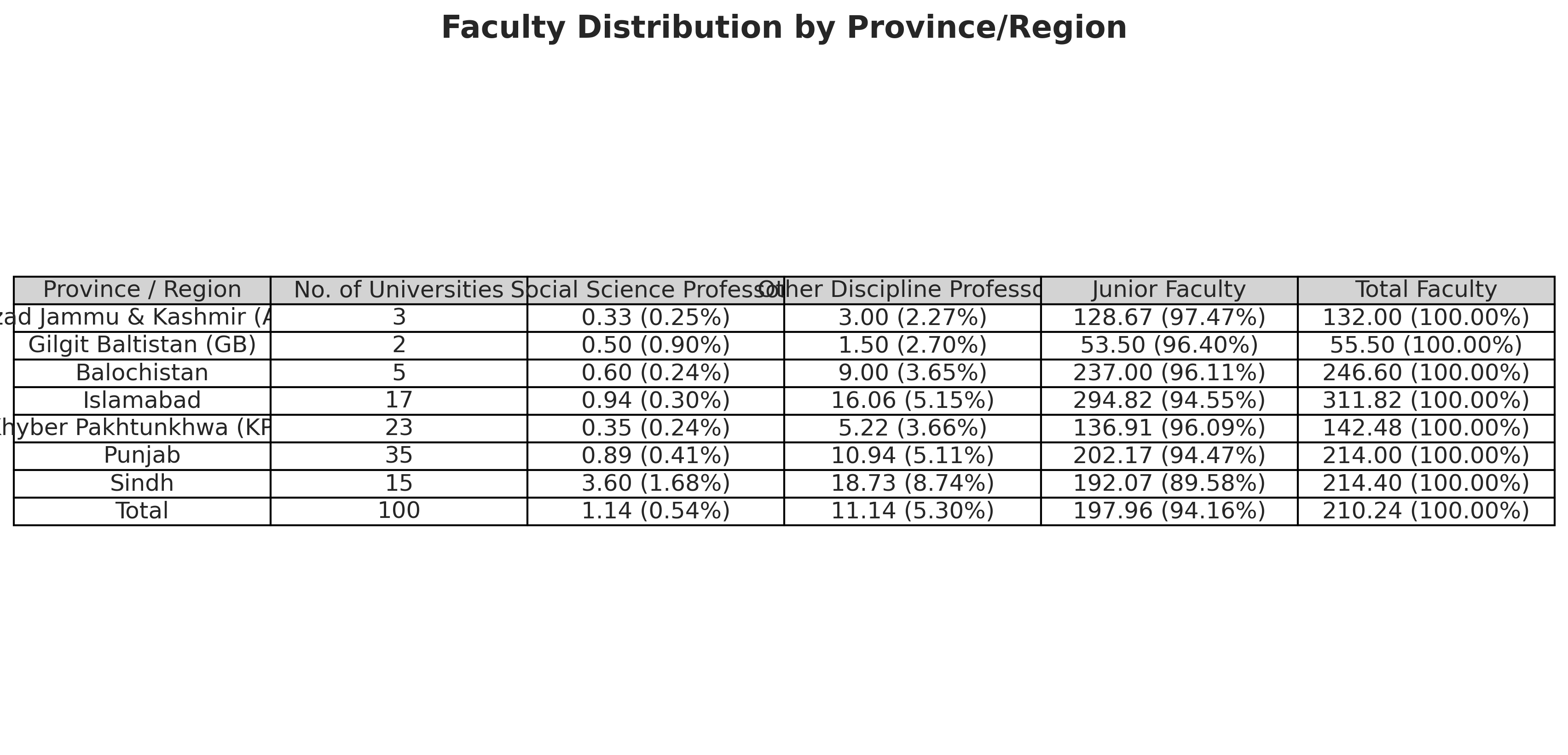
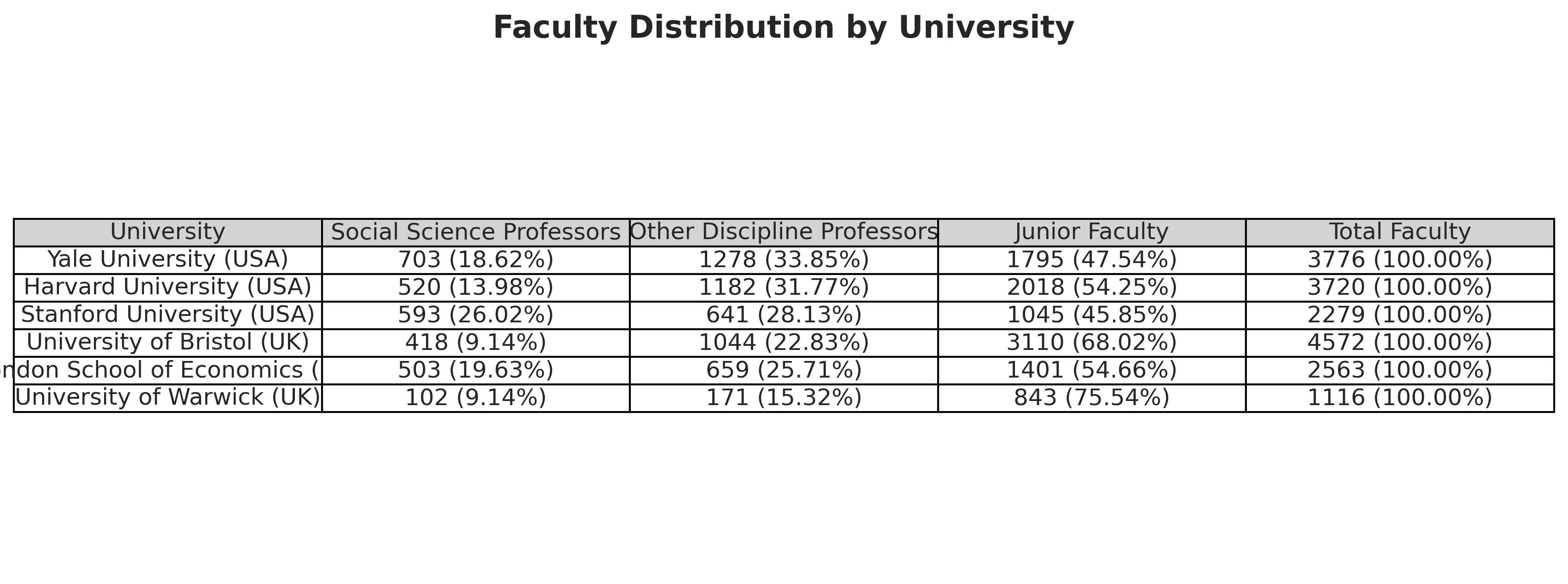
Professors, who are the lifeblood of any academic institution. They should be the ones who inspire critical thinking, foster innovation, and guide students toward intellectual and personal growth. Without a strong faculty, even the most modern buildings are little more than empty shells. Yet our leaders (political, DMG and military) think of academics as mere labor that is not central to education.
In Pakistan, politicians love making buildings without worrying over the quality of a faculty. That latter is easy in the minds of bureaucrats and politicians. Place an ad in the paper and interview some and hire them and put them on grade treadmill. Soon even the teachers/professors learn that money and power are in administration positions, and they vie for dean, registrar and VC.
The Current State of Professors in Pakistani Universities
A report that we did at PIDE reveals a stark reality: Pakistani universities lack professors and are operating with junior and part time professors as mere tuition centers. Compare the state of professors in our universities with those in reputable foreign universities in the following tables.
Universities are a poor career choice
Several interconnected factors contribute to the dwindling number of professors in Pakistani universities:
1. Brain Drain: According to a 2020 report by the Higher Education Commission (HEC), over 10,000 Pakistani academics are working in foreign universities, primarily in the Middle East, Europe, and North America. Many professors and senior faculty members leave Pakistan in search of better opportunities, higher salaries, and more conducive research environments abroad. Pakistani universities like the rest of the country do not operate based on merit. In addition, the system offers incentives only for administration and nepotism. Moreover, the people who control higher education would not like to allow people of merit to enter and disrupt the spoils system
2. Retiring professors in their prime: Unlike the rest of the world, professors are forced to retire at age 60 in the public sector an age that is considered prime in the rest of the world. As examples consider Noam Chomsky Kahneman and many others.
3. Inadequate Incentives: The academic profession in Pakistan is often perceived as less attractive compared to other career paths. Professors and senior faculty members face numerous challenges, including low salaries, limited research funding, and a lack of professional development opportunities. According to a 2021 survey by the Federation of All Pakistan Universities Academic Staff Association (FAPUASA), the average salary of a professor in Pakistan is significantly lower than that of their counterparts in neighboring countries like India and Bangladesh. This disparity discourages many from pursuing or remaining in academic careers.
4. Bureaucratic and judicial Hurdles: The process of hiring and promoting faculty members in Pakistani universities is often mired in bureaucratic inefficiencies. Delays in appointments, promotions, and the allocation of resources create frustration among academics. Additionally, political interference and nepotism in faculty appointments further exacerbate the problem, leading to a lack of merit-based hiring. All appointments and promotions are challenged in court and delay procedures. Thus appointments are poorly and made poorly adjudicated to lead to archaic and useless rules that bring forth the worst into academia.
5. Limited Research Opportunities: Research is a cornerstone of academic growth, but Pakistani universities often lack the infrastructure and funding necessary to support high-quality research. Professors, who are typically the driving force behind research initiatives, find it challenging to conduct meaningful research due to limited access to modern laboratories, libraries, and funding. Any good research will only find a market and appreciation overseas and languish without recognition in Pakistan. There will neither be citations nor honors if a researcher shows research capability. Industry needs government subsidies ad protection. Government is always looking for funds and amenable to accepting all policy conditionalities without questions. There is no demand for solving any problems from either the private sector or the government. As a consequence there is no demand for research.
6. False quantitative targets and recognition of excellence: HECs quantitative targets of papers and teaching as the only means for measuring performance has slowed down creativity as people game quantitative targets. HEC does not incentivize thought leadership but chasing meaningless measures. Thus, for example there are people with 100s of publications who have solved no problems or generated fresh ideas or even questions. But with their numbers they feel over empowered and will prevent real inquiry.
7. No respect for public intellectuals: Even when a few people emerge as public intellectuals through their writing or emerge as public intellectuals are never given any credence in local circles. There is no thought industry in the country such as consulting or research and innovation groups as the government relies on foreign consultants for tis work and provides a comfortable environment to business through protection and subsidies, so it seeks no product development or competitiveness research.
The Way Forward: Addressing the Crisis
The decline in the number of professors in Pakistani universities is a pressing issue that demands immediate attention.
Can policy do anything about it? The central points of all suggestions should be the Humboldt view to give professors respect and let them lead the research on key questions. Some suggestions based on this view:
· University autonomy needs to be strengthened but around the professor and not the administration and Vice Chancellor. The HEC requirement that senates should be dominated by government employees and that ministers, governors, chief ministers and other political appointees should be chancellors should be dropped. We don’t need a chancellor and if we are to have it let it be an honorary appointment and let it go to well-known professors like in the rest of the world.
· Instead of government grades and promotions locking in academic careers in public sector universities let a professional market for talent emerge.
· Rather than degree verification and hard number criteria of the HEC, follow the rest of the world and develop professional associations (PAs) based on merit and not universal franchise. In this milieu of low-quality mafias, it will be difficult to do but with regular consultations and careful nurturing it could be done. In fact, it must be done.
· Government must like the advanced world start to give respect to the PAs and not merely to their favorites and foreign consultants. Ministries must seek consultation with these PAs and leading professors seeking reports on key issues and giving feedback. Foreign consultants must be forced to be peer reviewed by leading professors and public intellect. Projects must be whetted by these associations of leading professors. Academic funding should be routed though these leading professors and not through the HEC as now.
· University rankings must be based on research and quality of professors.
· Archaic rules of promotion that should be revised to allow the heterogeneity of subjects to reflect through PAs and quality professors. But most importantly. courts should not be allowed to adjudicate promotions and appointments.
Governments swear by education and their desire to improve it. But they must move beyond buildings and teachers as government servants answerable to them. They must recognize that academic is a place for pure merit and no politics. Most important of all the government must allow academia to debate and criticize issues and policy and not regard such debate as an existential threat to the current government.
Without a debate on issues presented here, out effort to build universities will not lead to knowledge only worthless degrees and a dull youth.
Finally give your own universities respect. Our minister flew to Oxford to attend a debate. Would any minister do that in Pakistan? They will only come for ceremony and that too either back out at the last minute or come late to make an address of a political nature and leave.
Contibutor Nadeem Ul haque Director SIA and Jahangir Khan PIDE
Alongside the above policy choices we need:
- Strengthening university as an institution in itself. Self contained and self driven organisation capable to manoeuvre itself in time series while extensively using foresight and back casting.
- “Professor” development model needs to be re-modelled also. Ours is a fraternity constrained by imagination, pragmatism, innovation, loud thinking and willingness to debate and a discussion. Mere faculty development programs or tenure placements abroad has not encouraged critical thinking and desirable advancement in the development thought amongst the fraternity. We need curated environment and incentives to encourage professors to exercise their instincts and skills to contribute to thought advancement so that it gradually becomes an exhibited trait.